


How Halloween Became a Second Carnival Season in New Orleans
- Laura Kuhn
- Jan 20
- 3 min read

🎃 In most places, Halloween is a single night: carved pumpkins, a few costumes, maybe a party, and then it’s over.
In New Orleans? Halloween is a season—a full-bodied, costume-forward, street-theater celebration that feels less like a holiday and more like a mini-Carnival.
It didn’t happen by accident. Halloween became New Orleans’ “second Carnival season” because the city was already built for it.
🎭 New Orleans Was Practicing Halloween Long Before October
New Orleans has always loved transformation. Masking, performance, and public celebration aren’t special occasions here—they’re cultural habits.
Mardi Gras taught generations of New Orleanians a few core rules:
Put on a costume and become a character
Take the party into the streets
Let the whole city be the stage
Go big—or don’t bother going at all
So when Halloween arrived as a mainstream American holiday, New Orleans didn’t just adopt it. We Carnival-ed it.
🕯️ The City’s Relationship With the Dead Is… Different
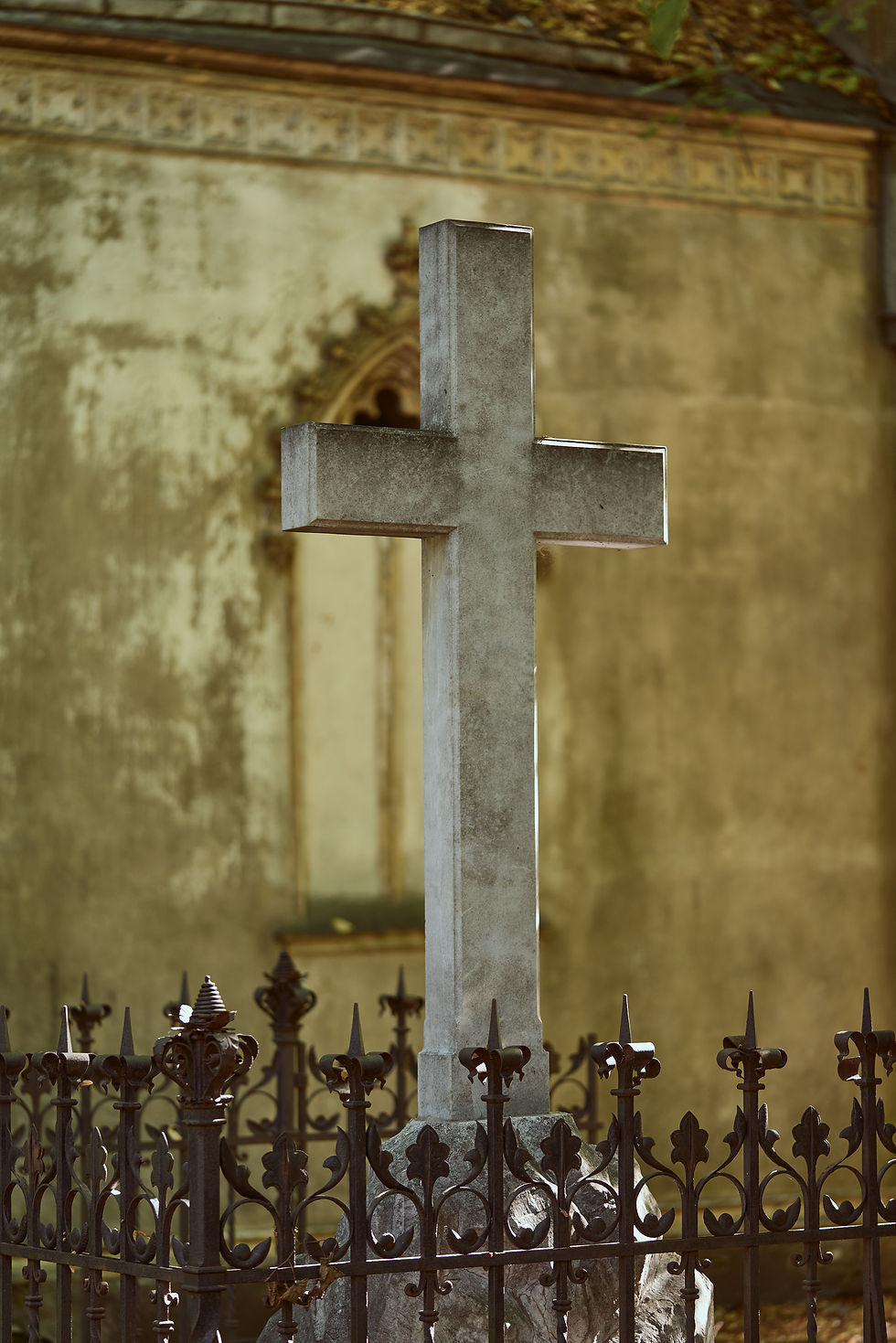
Another reason Halloween thrives here: New Orleans is comfortable with death in a way many cities aren’t.
Between above-ground cemeteries, centuries of layered history, and traditions that honor the departed (think jazz funerals and second lines), the line between “spooky” and “sacred” is naturally blurred. The supernatural isn’t just a theme—it’s part of the city’s folklore and daily conversation.
That makes Halloween feel less like a random spooky aesthetic and more like a time when New Orleans leans into something it already understands: the thin veil, the stories, the mystery.

⚜️ The French Quarter Became the Perfect Stage
If Mardi Gras has routes and grandstands, Halloween found its home base in the French Quarter—already packed with:
theatrical nightlife
historic architecture that looks cinematic at night
street performers and characters year-round
bars and balconies made for spectacle
Over time, the Quarter turned Halloween into an open-air runway—part horror movie, part drag show, part Gothic opera, part “what am I even looking at (in the best way).”
It became the kind of celebration where spectators don’t just watch—they participate.
👑 From Homemade Costumes to Full Production
Early Halloween in New Orleans, like everywhere else, was once more low-key—family gatherings, neighborhood traditions, kid-friendly fun.
But New Orleans has a unique superpower: we can’t resist upgrading a good thing.
As costume culture evolved, so did the expectations. The city’s deep bench of makers—seamstresses, artists, mask builders, wig stylists, makeup geniuses—turned Halloween into a night where looks are planned weeks (or months) in advance.
And because Mardi Gras already trained people to build, rework, and re-wear costume pieces, Halloween became the perfect excuse to remix:
Mardi Gras capes turned vampire cloaks
crowns became zombie royalty
sequins became “glam gore”
feathers became haunted showgirl fantasy
🧟 The “Second Carnival” Era: Events That Feel Like Parades
Here’s the real shift: Halloween stopped being a party you attend and became a season of events you plug into.
Costume crawls. Club nights. Themed shows. Street gatherings. And the best part—experiences that bring the theatrical energy of Carnival into October.
That’s where things like Zombie Runs shine: they borrow the spirit of a parade (characters, crowds, spectacle) and combine it with adrenaline and story. Instead of watching floats roll by, you’re inside the narrative—running, laughing, screaming, fully in character.
🎶 Spooky Season, New Orleans Style
New Orleans doesn’t do quiet Halloween. It does Halloween with rhythm.
Even when the vibe is eerie, there’s music somewhere—brass band energy, DJs, street drummers, a bass line spilling out of a doorway. That soundtrack turns “scary” into “fun,” which is basically the New Orleans specialty.
We don’t just flirt with fear.
We dance with it.
🎃 Halloween Didn’t Replace Carnival—It Joined It
Mardi Gras will always be Mardi Gras. But Halloween earned its place as a second Carnival season because it matches the city’s core identity:
transformation
spectacle
community
creativity
and a deep love for beautiful weirdness
So when October hits, New Orleans doesn’t switch into Halloween mode.
It just turns the volume up on what it already is.
And that’s why—every year—Halloween here feels like Carnival’s darker, glitterier, undead little sibling.
See you in the streets.


Comments