


A Global Phenomenon: The History and Tradition of Zombie Runs
- Laura Kuhn
- Jan 20
- 3 min read
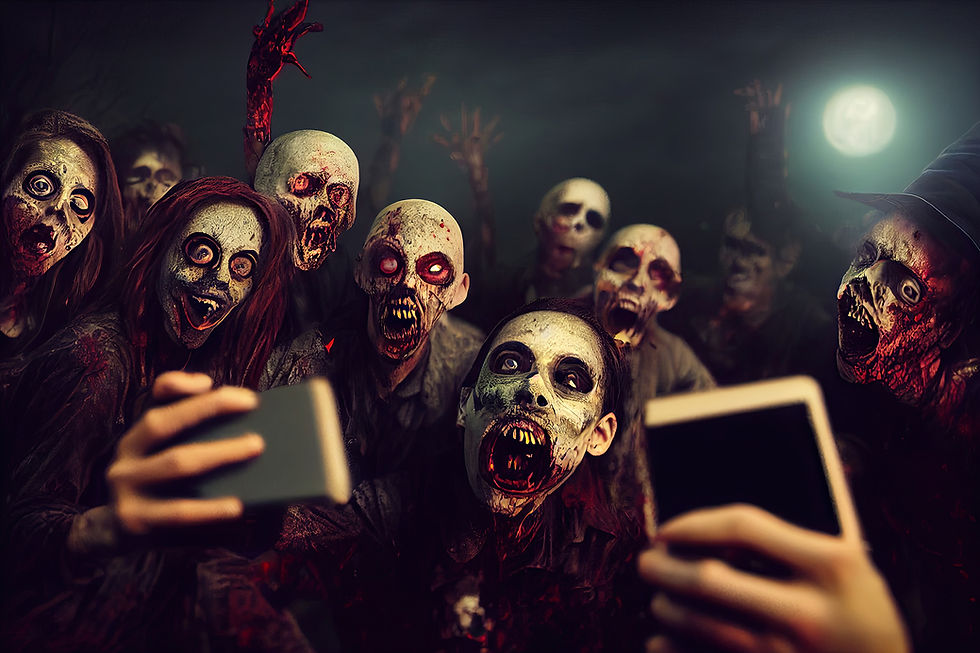
What happens when fitness meets horror, costuming meets community, and a little adrenaline gets thrown into the mix? You get a Zombie Run—one of the most wildly entertaining event formats to shamble its way across the globe.
From city streets to wooded trails, zombie runs have become a worldwide tradition, blending athletic challenge, immersive theater, and a shared love of the undead. But this phenomenon didn’t appear overnight. Like any good monster story, it evolved.
🧠 Where It All Began: Fear Meets Fun
Zombie runs emerged in the early 21st century, fueled by a perfect storm of cultural obsession. Zombie movies and television shows surged in popularity, endurance events were booming, and people were hungry for experiences—not just races.
The solution? Turn a run into a story.
Instead of racing against the clock, participants ran from something. Early zombie runs introduced actors, obstacle courses, and “life” systems—often flags or belts—creating a playful survival scenario that made even non-runners eager to participate.
Suddenly, fitness felt cinematic.
🌍 The Undead Go International
What started as niche events quickly spread across continents. Zombie runs popped up in:
North America, with large-scale urban runs and mud-heavy obstacle courses
Europe, where historic towns and castles became atmospheric backdrops
Asia, blending horror aesthetics with pop-culture cosplay
Australia, embracing outdoor terrain and endurance-style formats
Each region added its own flavor, but the core remained the same: immersive storytelling, costuming, and communal chaos.
No matter the language or location, the rules were universal—run, survive, scream, laugh, repeat.
🎭 Costumes, Characters, and Commitment
Zombie runs are unique in that they don’t just allow costumes—they thrive on them. Zombies train to perfect their shamble, growl, and lunge. Survivors craft backstories, uniforms, and apocalyptic looks that rival film sets.
In many cities, zombie runs became annual traditions, with participants returning year after year—sometimes on different sides of the chase. One year you run for your life. The next, you’re part of the horde.
It’s participatory theater at its finest.
🕯️ More Than a Race: Why Zombie Runs Endure
Zombie runs succeed because they offer something rare: accessibility without boredom. You don’t need to be an elite athlete. You just need a sense of humor, a willingness to play along, and maybe a little comfort with being chased.
They bring together:
runners and walkers
horror fans and casual thrill-seekers
performers, athletes, families, and friend groups
Everyone has a role. Everyone has a moment.

🧟♀️ The New Orleans Twist
In cities like New Orleans—where masking, performance, and pageantry are already cultural pillars—zombie runs feel less like imported novelty and more like a natural extension of tradition.
Here, the undead don’t just chase you. They perform. They interact. They turn streets into stages and participants into characters inside a living story.
🌕 The Future of the Undead Run
As experiential events continue to evolve, zombie runs remain timeless. They adapt, expand, and reinvent themselves while holding onto what makes them special: shared adrenaline, creative expression, and the joy of surviving something ridiculous together.
Because at the end of the day, a zombie run isn’t about fear—it’s about fun.
And as long as people love to dress up, tell stories, and run screaming through the streets with friends, the undead will always find a way to rise again.
The tradition lives on. Run while you can.


Comments